This guide explains how Payment Processing Systems work end-to-end—from authorization and routing to settlement, reconciliation, and security. It provides objective background on core components, common integration approaches, and risk controls used by payment providers. Readers will also find a comparison table of typical options, a step-by-step implementation guide, and practical conditions for choosing the right setup.

Payment Processing Systems determine how smoothly customers can pay and how safely merchants receive funds. In practice, a well-designed setup coordinates authorization, routing, compliance controls, settlement behavior, operational monitoring, and reconciliation so that transactions succeed consistently and accounting remains auditable. For businesses evaluating Payment Processing Systems, the very critical priorities are: (1) reliable approval rates through robust routing and well-defined retry strategy, (2) secure handling of cardholder data via PCI-aligned methods such as tokenization, encryption, and strict data minimization, (3) accurate settlement and reconciliation with transaction-level traceability, and (4) clear operational ownership across providers and internal teams.
Reliable operations in payments are not only about “making it work” during happy-path testing; they also depend on how the system behaves when things go wrong. That includes network timeouts, provider partial outages, event delivery delays, duplicate webhook deliveries, retry storms, ambiguous transaction states, refunds during settlement windows, chargebacks with evidence deadlines, and reporting gaps that create reconciliation friction. The difference between a merely functional payment integration and a dependable Payment Processing System is often found in those edge cases.
At a high level, very Payment Processing Systems follow a similar lifecycle. A customer initiates payment (in-store via POS, online checkout, or invoicing/payment links). The payment flow then goes through an authorization stage and later settlement, when funds are transferred to the merchant account. While implementation details vary by provider and region, the logic is consistent across major card networks and many alternative rails (such as bank transfer, local schemes, or digital wallets).
Understanding the lifecycle is essential because most “payment problems” are actually problems at specific lifecycle boundaries. For instance, authorization approval rates depend on how the system sends requests and interprets responses; capture/void behavior depends on state transitions and idempotency; reconciliation depends on the mapping between authorization/capture/settlement events and your internal orders/invoices; and dispute outcomes depend on how you store evidence and how quickly you can respond to representment deadlines.
Authorization is the real-time decision point. The system verifies payment details with the customer’s issuing bank and responds with an approval or decline. This step is latency-sensitive; even small delays can reduce conversion, especially in mobile checkouts and during peak shopping periods.
Beyond latency, authorization reliability is influenced by how requests are formed (correct amounts, currencies, customer/descriptor data), how the integration handles transient errors (e.g., timeouts), and how idempotency is implemented so that retries do not produce double-charge risks. A Payment Processing System must also interpret declined outcomes correctly—distinguishing between hard declines (do not retry) and soft declines (maybe retry or use alternative payment method strategy), where the provider and acquiring channel offer such granularity.
Routing is the part that can quietly shape performance. Routing determines which acquiring pathway is used and how retries are handled when intermittent issues occur. Merchants benefit when routing is transparent enough to troubleshoot and stable enough to minimize unnecessary declines. Good routing design typically includes well-defined failover rules, health checks, and a predictable approach to selecting a route for each transaction.
In modern environments, routing often also includes orchestration across multiple service components—such as selecting between providers, optimizing for lower latency versus higher approval rate depending on transaction context, and applying rules for specific payment methods or regions. If routing is not handled well, businesses may observe patterns like “works sometimes,” spikes in declines after provider updates, or confusing discrepancies between dashboard statuses and what customers see at checkout.
Settlement converts approved transactions into merchant funds, often on a daily or periodic schedule. Settlement outcomes are affected by chargebacks, refunds, partial captures, and adjustments like interchange variations. A mature Payment Processing System makes settlement predictable and traceable, typically through consistent status models and detailed reporting.
Because settlement is downstream of authorization, teams often misunderstand the timeline. For example, an authorization can be approved but later reversed or fail to settle due to capture timing rules, compliance constraints, or network adjustments. A reliable system therefore needs to represent these distinctions clearly to operations and finance teams.
From an industry perspective, Payment Processing Systems are best understood as an ecosystem of roles and interfaces rather than a single product. The very common components include:
Notably, “Payment Processing Systems” can be delivered as a single integrated platform or as separate components. Both approaches can work, but the decision should be guided by operational ownership, integration complexity, reporting normalization, and how incidents are diagnosed across boundaries.
When components are split across multiple providers (for example, a gateway plus a separate token vault plus a separate risk engine), the integration can become more flexible but also more fragile. In such setups, a major operational requirement is to ensure consistent identifiers and state transitions across providers. Without consistent reference IDs and a well-defined event model, you can lose traceability and create reconciliation gaps.
Very merchants choose one of three integration patterns:
In practice, Payment Processing Systems should be evaluated not only on technical feasibility but also on how they affect incident handling, monitoring, and compliance posture. For instance, hosted checkout may reduce certain security burdens but still requires robust eventing and reconciliation in your backend. Meanwhile, API-based checkout gives more UX control but can introduce new failure modes like tokenization library mismatches across app versions.
It’s also important to consider customer-specific requirements. For example, businesses with recurring billing and subscription models often require token-based flows and mandate changes, meaning that the integration pattern must support lifecycle events such as “payment method updated,” “renewal failed,” and “customer churned” in a way that your systems can reliably process.
Payment Processing Systems typically intersect with PCI DSS requirements. The exact compliance burden varies based on how cardholder data is handled and whether your environment touches raw card data. A sound evaluation should focus on data minimization and segmentation—ensuring sensitive data is tokenized, encrypted in transit, and not stored unnecessarily.
PCI DSS is not merely a checklist; it is an operational model. The most resilient implementations treat security as a continuous process: secure configuration management, vulnerability scanning, access controls, audit log retention, and regular reviews of data flows. Teams should understand not just what the provider promises, but what is actually within your system boundaries.
For objective grounding, PCI Security Standards Council documents describe the general framework for PCI compliance and the scope-dependent nature of assessment. Merchants should consult the PCI council’s official materials and their acquiring partner for applicability.
Beyond PCI scope, many organizations also consider adjacent requirements such as data privacy regulations (e.g., local privacy laws), incident response obligations, and retention policies. If you store tokens or transaction identifiers, you need to treat those fields carefully as well—because “not raw card data” does not necessarily mean “no sensitive information.” In dispute workflows, evidence files might include customer addresses or other personal data, so they must be protected and accessible only to authorized roles.
Security controls that matter operationally include:
Payment flows fail for many reasons: network timeouts, retries from client apps, intermittent gateway issues, or charge rules. A high-quality Payment Processing System supports operational reliability through mechanisms that prevent ambiguity and duplication.
In practice, reliability is achieved by combining idempotency, clear status semantics, robust eventing, and operational tooling. Each of these elements addresses a different class of failure.
From an expert viewpoint, “working in a lab” is not enough. Your selection should include how the system behaves during partial outages and how quickly issues can be isolated between your stack and the provider’s services.
For example, consider an outage where authorization responses return but webhook updates fail. In this scenario, your checkout might receive an immediate approval, yet your backend would not get subsequent capture or settlement events. A reliable system should support reconciliation strategies that can rebuild transaction state from polling APIs or scheduled reconciliation jobs, not solely rely on real-time webhooks.
Operational controls also include:
Pricing for Payment Processing Systems is rarely limited to a single number. Merchants often face a combination of transaction-based fees, gateway access fees, and adjustments such as chargeback handling costs or markup for certain payment methods. Because fee structures vary, the very practical approach is to evaluate “total cost of ownership” rather than per-transaction headlines.
In procurement conversations, merchants commonly request clarification on:
Supplier detail note: This article does not name specific suppliers or quote local prices because pricing is highly contract-dependent. For an accurate estimate, request a merchant proposal from qualified suppliers and verify terms in writing, including settlement timing and fee calendars.
To control total cost of ownership, teams should also model payment-related operational costs. For instance, a provider with lower per-transaction fees but weak reporting can create additional finance hours and reduce the speed of financial close. Likewise, a system with higher approval rates can reduce churn and customer service workload, sometimes offsetting higher fees.
When building your pricing model, consider scenario-based testing rather than average assumptions. For example:
Finally, ensure pricing clarity around settlement timing. Cash flow is part of payment “cost,” even when fees look acceptable. A system that settles later may increase working capital needs.
Payment Processing Systems should be judged by how they handle the “unhappy path.” Refunds need consistent reconciliation logic. Chargebacks require a workflow that captures evidence, tracks deadlines, and provides a clear audit trail. Ideally, your system supports both business users and finance teams with role-based permissions and clear responsibility boundaries.
Refunds are sometimes more complex than they appear. Refund timing can intersect with settlement windows, capture timing, and any rules about partial refunds. A robust system must support:
Chargebacks (and related dispute representment processes) involve additional constraints. You may need to gather evidence such as proof of delivery, customer communication, and order details. A Payment Processing System often supports exporting transaction evidence metadata and can integrate with your internal systems, but the quality of your evidence workflow depends on how well order and fulfillment systems store relevant documents.
When evaluating providers, look for:
These capabilities affect both customer experience and how quickly you can respond to representment requests. In fast-moving businesses, dispute response time can be the difference between winning and losing a case, and it can also impact future fraud and risk scoring.
Operationally, you also need to decide who “owns” disputes. Some organizations centralize dispute workflows in a support operations team; others involve legal/finance review. Your Payment Processing System should support that structure through permissions, audit logs, and evidence availability. Without these, dispute response can become a manual scramble at deadlines.
Settlement reporting is where many payment projects succeed technically yet struggle operationally. A strong Payment Processing System provides transaction-level data, fee breakdowns, and mapping to orders, invoices, or subscriptions. That makes reconciliation more than a manual spreadsheet exercise.
In many payment implementations, data quality is the single biggest cause of “quiet failures.” A checkout may succeed, but finance later finds that fee records do not map to the correct invoices, or that refunds are recorded under inconsistent identifiers. This creates reconciliation friction during financial close and can lead to errors that are difficult to correct retroactively.
As a top practice, design your internal identifiers from day one:
To make accounting frictionless, reconciliation should be deterministic and repeatable. That means building a process that can reconstruct the “expected” state from authoritative sources, and that can clearly explain differences. For example, if an order is paid but the settlement report shows a different net amount due to fees or adjustments, the system should provide enough detail to explain the delta.
In regulated contexts, the ability to produce an audit-ready trail is often as important as payment authorization performance. Audit readiness includes:
Even in non-regulated contexts, finance teams rely on consistent exports and reporting formats. If a provider changes reporting schema or uses inconsistent field names across endpoints, reconciliation code can break. Teams should treat payment data schemas as a stable contract and manage provider changes through staging testing and versioned integration layers.
Fraud detection in Payment Processing Systems is rarely about a single rule. It’s a layered approach using signals such as:
Overly aggressive settings can harm legitimate customers. A prudent implementation uses staged rollout (starting with monitoring or low-impact rules, then tightening with measured results). The goal is not just to reduce fraud; it is to reduce fraud at a cost-effective level that does not undermine conversion and revenue.
Fraud controls are also part of reliability. Consider the following operational reality: when fraud systems block transactions, customer support may interpret that as “payment failure” rather than a risk decision. A well-designed system helps teams differentiate fraud declines from network issues or customer input errors.
When configuring fraud rules, teams should:
Additionally, fraud prevention must integrate with dispute handling. If you block a transaction as risky but later the customer claims they did not attempt fraud, you might need evidence of risk decision logic and customer communication. Conversely, for legitimate customers flagged by fraud, you need a customer-friendly remediation path (e.g., step-up authentication or alternate verification methods) that does not create additional friction.
The following guidance is designed to help teams implement Payment Processing Systems with fewer surprises. Adjust based on your industry, customer journey, and existing commerce stack. This guide assumes you will operate payments not only technically but also operationally—with monitoring, runbooks, and reconciliation processes.
| Phase | What to do | Practical conditions/requirements |
|---|---|---|
| Scope and use-case mapping | Define payment channels (in-store, online, recurring), supported currencies, and refund/dispute expectations. | Confirm which payment methods and transaction types you must support (auth, capture, partial capture, refunds). Document whether your flows require manual review for certain transactions. |
| Provider evaluation and contracting | Request proposals that include fee calendars, settlement schedules, and webhook/event documentation. | Obtain written terms for latency SLAs (if any), settlement timing, dispute workflows, and data retention policies. Ensure reporting formats and export availability are specified contractually where possible. |
| Security design review | Choose an integration pattern (hosted checkout, API-based with tokenization, etc.) aligned to your PCI strategy. | Ensure data minimization: avoid storing raw card data; validate tokenization and encryption controls. Conduct a data flow mapping exercise that shows exactly where sensitive data can travel and where it is eliminated. |
| Environment setup | Prepare test keys, staging environment, and sandbox test transactions (successful and failure scenarios). | Use realistic test cases for declines, timeouts, retries, refunds, and partial captures. Include test scenarios for duplicate webhook delivery and out-of-order event handling. |
| Core flow implementation | Integrate payment creation, confirmation/authorization handling, capture logic, and status updates. | Implement idempotency keys and stable internal identifiers to prevent double charging. Ensure your backend state machine handles all relevant provider states and transitions. |
| Eventing and reconciliation | Configure webhooks for transaction updates and build reconciliation mapping to orders/invoices. | Set up retries and signature verification for webhook security; validate event ordering assumptions. Build reconciliation jobs that can recover state if webhooks are delayed or missing. |
| Fraud controls configuration | Turn on baseline risk checks and create rules that match your customer profile. | Start with monitoring or low-friction settings; define thresholds and a review cadence. Ensure fraud decision outcomes are visible and categorized so customer support can differentiate risk declines from errors. |
| Disputes and refund workflows | Integrate refund initiation and evidence capture for disputes. | Assign operational owners and ensure evidence availability from your order system. Implement role-based permissions and audit logging for evidence changes and refund/dispute submissions. |
| Go-live readiness | Run end-to-end testing including concurrency, refund/cancel edge cases, and failure simulation. | Confirm runbooks for outages, customer support workflows, and escalation paths. Simulate partial outages such as “authorization works but webhooks fail.” Verify that the customer experience remains consistent (e.g., no duplicate confirmations). |
| Post-launch monitoring | Monitor approval rates, decline reasons, webhook delivery health, and reconciliation accuracy. | Track a defined set of KPIs and iterate rules only with measured impact on both fraud and conversion. Establish alerting thresholds that trigger investigation before revenue impact becomes severe. |
For each phase, it helps to define clear “exit criteria.” For example, before go-live, you may require:
Also, keep a documentation pack. Payments are cross-functional (engineering, security, finance, support), so having a shared reference of data identifiers, state machine diagrams, webhook event definitions, and runbook instructions can reduce time-to-resolution during incidents.
The table below compares common setup categories. It is intentionally generic (no links, no proprietary claims), focusing on how teams typically experience each option.
| Option | Top for | Key trade-offs | Operational considerations |
|---|---|---|---|
| Hosted checkout | Teams that want faster rollout and reduced PCI exposure | Less control over UI/UX details and checkout flow | Ensure branding requirements and webhooks meet your reconciliation needs. Validate how you receive tokens/IDs for recurring billing. |
| API-based checkout with tokenization | Merchants that prioritize user experience customization | More engineering responsibility for secure integration patterns | Validate client-side security measures and token handling boundaries. Maintain integration compatibility across app versions. |
| Orchestrated multi-provider processing | Businesses that need routing flexibility and resilience | More complex contracts and reporting normalization | Invest in monitoring, provider-level analytics, and fallback runbooks. Ensure your internal state model normalizes provider differences. |
| In-store POS integration | Retailers with hardware and staff-driven workflows | Device compatibility and firmware constraints | Plan for offline/partial connectivity behavior where applicable. Validate refund flows and evidence capture for disputed transactions. |
| Recurring billing and subscription flows | Subscription businesses requiring reliable lifecycle management | More lifecycle states and customer communications | Ensure dunning workflows, mandate changes, and refund/credit behavior are defined. Plan for token updates and failed renewals to avoid revenue loss. |
When selecting among these options, teams should ask operational questions—not just engineering questions. For example: if approvals drop unexpectedly, can you isolate whether the problem is routing, fraud settings, or webhook delivery? Can finance reconcile the impact within the same day? Can support explain what customers experienced and why?
For readers who want to anchor decisions in published standards and widely cited guidance, consider reviewing:
These references support a defensible, compliance-oriented approach rather than relying on marketing claims.
In addition, it’s often useful to review internal security policies and the acquiring partner’s documentation. Provider-specific rules can influence message formats and state transitions. Aligning internal expectations with those provider rules avoids misinterpretation during reconciliation and dispute handling.
Payment Processing Systems are the combined technologies, integrations, and controls that enable customers to pay and merchants to receive funds. They typically cover authorization, security controls (tokenization and encryption), routing, settlement handling, reconciliation, reporting, and support for refunds and disputes.
A payment gateway is usually one component that helps route and secure payment requests. Payment Processing Systems describe the full end-to-end setup—often including orchestration, acquiring channels, tokenization, risk management, settlement handling, and reconciliation.
Focus on authorization reliability, clear fee and settlement terms, webhook or reporting quality, security posture aligned to PCI practices, and operational support for incidents, refunds, and chargebacks. Also confirm how dispute workflows and evidence requirements are handled.
In many modern architectures, merchants can avoid storing raw card data by using hosted checkout or tokenization-based API patterns. The exact responsibilities depend on your chosen integration and your compliance scope; consult PCI guidance and your acquiring partner for accurate applicability.
Implement idempotency controls in your backend so repeated payment requests (from retries or network interruptions) do not create duplicate authorizations/captures. Use stable internal identifiers and verify transaction states before retrying or confirming outcomes.
Refunds typically generate reversal activity that can impact net settlement amounts. Chargebacks represent disputes reversed from the merchant’s funds and can include fees. A well-designed Payment Processing System provides transaction-level linkage and reconciliation data so finance teams can account for net outcomes accurately.
Often yes. Providers may offer risk scoring, velocity checks, and rule management as part of the payment stack. The very effective implementations involve monitoring, careful thresholds, and ongoing tuning to maintain conversion while reducing fraudulent activity.
It means transaction records (including fees, adjustments, and status changes) can be mapped to your orders/invoices and are delivered in a consistent format via dashboards, exports, and/or events. This enables automated matching rather than manual spreadsheet work.
Yes, many systems support recurring billing with tokenization and subscription lifecycle events. The key is to configure payment method updates, handling for failed renewals, dunning workflows, and clear rules for refunds and cancellations.
Timelines vary with integration complexity, security review, and testing scope. Hosted checkout implementations can be faster, while API-based integrations and complex orchestration may require more time for eventing, reconciliation, and failure-mode testing. Your top estimate comes from a structured project plan with your engineering team and the supplier.
At minimum: end-to-end testing for success and failure cases, secure webhook configuration, idempotency and reconciliation logic validated, a runbook for operational incidents, and clear processes for refunds and disputes. Your compliance and security sign-off should also be completed according to your organization’s policies.
If you’re deciding which Payment Processing Systems to adopt, treat it as both a technical and operational commitment. Use this checklist to guide stakeholder alignment across engineering, security, finance, and operations.
Customer experience
Operational reliability
Accounting integrity
Security and compliance
Dispute readiness
Contract clarity
During selection, it can be helpful to request a structured pilot with agreed KPIs such as approval rate, webhook delivery latency, reconciliation accuracy, and dispute workflow completeness. A short pilot with deep test cases often reveals integration fragility that surface testing does not.
Payment Processing Systems are not simply a way to “take payments.” They are a control plane for transaction success, security posture, operational resilience, customer experience, and financial reconciliation. By evaluating how the system handles authorization, routing, settlement, refunds, disputes, and reporting—and by implementing with idempotency, secure eventing, robust monitoring, and audit-ready reconciliation—businesses can build a payment foundation that scales with confidence.
Reliable payment operations come from disciplined engineering and operational readiness: clear state models, predictable retry and idempotency behavior, security controls that reduce PCI and breach risk through minimization, and reconciliation processes that allow finance to close with minimal friction. When those pieces align, Payment Processing Systems stop being a recurring source of uncertainty and become a dependable system that supports growth.
Striking the Perfect Balance: Navigating Premiums and Out-of-Pocket Expenses in Senior Insurance Plans

Explore the Tranquil Bliss of Idyllic Rural Retreats

How to Make Lasting Memories at Disneyland Attractions

Affordable Phones and Plans for Seniors

Affordable Full Mouth Dental Implants Near You

Unlock the Top Kept Secrets to Finding Your Ideal Dentist for Flawless Dental Implant Results!

Discovering Springdale Estates

Unveiling RS Sul Telecom Services

The Guide to Car Trading


Delving into Worldline Issuing
In the evolving realm of digital payments, Worldline Issuing stands at the forefront, providing seamless and secure solutions for card issuance and management. As the payments industry transitions towards more efficient and customer-centric practices, Worldline Issuing offers a comprehensive suite of services tailored to the needs of financial institutions and end-users, enhancing both operational efficiency and security.
Understanding Worldline Issuing Solutions
Dive into the realm of Worldline Issuing, a cornerstone in the fintech landscape that facilitates secure and efficient digital payment solutions. Worldline has established itself as a key player by offering sophisticated tools to streamline financial transactions, thereby enhancing consumer convenience and fostering secure monetary operations worldwide through innovative issuing services.
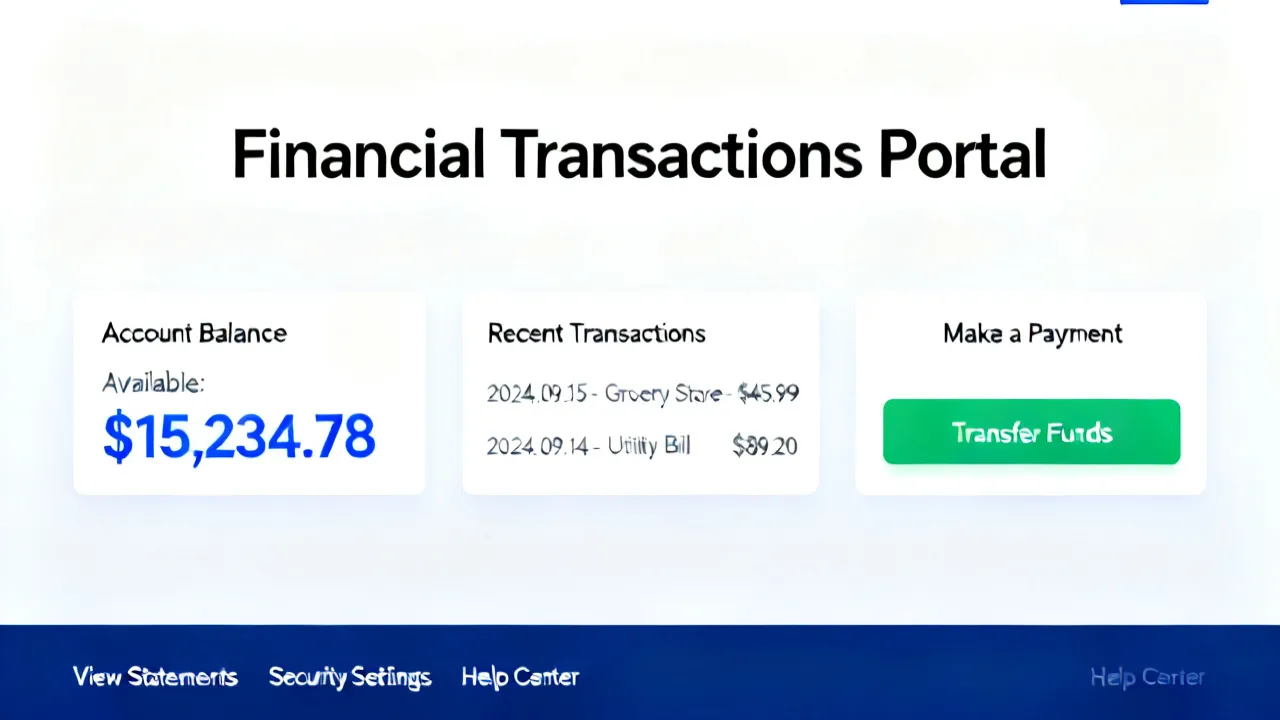
The Comprehensive Guide to Corpay.com
This article delves into the features and benefits of Corpay.com, a key player in the financial transaction space. Known for its innovative solutions, the website offers robust tools for managing financial transactions, making it a valuable resource for businesses and individuals alike seeking efficiency and reliability in managing their financial operations. Explore its offerings to gain a deeper understanding of its industry impact.

Understanding Lifetime Benefits Solutions and How to Choose Wisely
This guide explains how to evaluate Lifetime Benefits Solutions services with a practical, objective lens. It outlines what the keywords typically refer to in benefits planning, why customers compare providers and pricing structures, and how to approach decisions responsibly. You’ll also find a conditions checklist, a comparison table framework, and a set of FAQs to support informed next steps.

Understanding the Impact of 0009968545
This article explores the significance and implications of the keyword '0009968545' within industry and academia. Although '0009968545' might appear as an abstract sequence of numbers to the unaccustomed eye, it potentially represents an International Standard Book Number (ISBN) that could be a crucial reference for numerous academic publications. This analysis examines the potential contexts and influences of this code, offering insights from an expert's perspective.

Digio Livelo: How It Works and What to Compare
Digio Livelo is top understood by comparing how earning, redemption, and service terms align with your goals. This guide explains the background of points-and-rewards ecosystems, typical partner mechanics, and decision factors such as fees, eligibility, transfer rules, and support quality. It’s an objective overview to help you evaluate fit with care.
